
Why Is My Cycle Suddenly Irregular? Who to Call and When
Your last cycle ran forty-one days. The one before it ran thirty-nine. For years before those, they came every twenty-nine or thirty days, close enough that you stopped paying attention to the count.
One long cycle isn't a pattern, though three might be. You already have the numbers. What you don't have is a threshold to judge them against, since searching turns up two or three competing definitions of "normal."
This blog answers two questions in order. The first is whether your cycles changed enough to count as "irregular" by a standard a doctor would use. The second is who evaluates them once you know. That second question has two answers, and the right one depends on what you're trying to do right now.
How to Tell If Your Cycles Are Actually Irregular
Most cycles run 24 to 38 days, with bleeding lasting up to eight days. Those numbers describe women in general, though both ends of the range move with age. One cycle outside them doesn't make your cycles irregular.
"Irregular" has a definition that compares your cycles to each other rather than to a population. Look back over the past twelve months and find your shortest cycle, then your longest. Subtract the shorter from the longer. If the difference lands under about nine days, your cycles are varying normally. Ten days or more is classified as "irregular." If you don't have twelve months of dates, start writing down every start date now.
Having a period every month doesn't rule out irregular periods. The gaps between them can still swing widely across the year. The same goes for a period every two weeks, or for spotting between periods and after sex. Stretches of several months with no period count too.
What Usually Causes Cycles to Change
Doctors usually begin their evaluations of a changed cycle by seeing if pregnancy might be the cause. After that, thyroid function and elevated prolactin are the most common places a doctor looks. Stress, significant weight change, and heavy exercise belong on the same list, as do certain medications. Starting or stopping hormonal birth control can change cycles for months afterward.
Polycystic ovary syndrome, PCOS, produces the same symptom. You'll also see it called polyendocrine metabolic ovarian syndrome, or PMOS. Different names, same diagnosis. Cycles change again in the years before menopause, usually in your late thirties or forties.
Many cycle changes trace to the same hormonal signaling that drives ovulation. So the symptom looks the same no matter which cause is behind it. Reading about them won't tell you which one is yours. Only testing separates them.
When to Call a Doctor Right Away
A few symptoms need a doctor's attention before you sort out the cause:
- Bleeding that soaks through a pad or tampon every hour, or more than one in an hour
- Bleeding heavy enough to leave you lightheaded
- Severe pelvic pain
- Bleeding between periods or after sex
Those mean you belong at a doctor's office now rather than at your next annual visit, since they can point to anemia or a structural cause.

Who to Call Depends on What You're Trying to Do
A routine gynecologic evaluation and a fertility workup ask different questions. The first asks what changed your cycles, while the second asks what your cycles are doing to ovulation and timing. Both are thorough evaluations. So the right office depends on which question you need answered, and that comes down to what you're trying to do with your fertility right now.
If You're Not Trying to Conceive Right Now
If you aren't trying to conceive right now, call your OB-GYN or your primary care doctor. They test for the most common causes of irregular periods. Most people get their answer there.
A routine evaluation starts with a pregnancy test, your medical history, and a physical exam. A complete blood count comes next if bleeding has been heavy, because prolonged bleeding can drop your iron. Then comes thyroid testing, followed by hormone testing aimed at the symptoms you've described. A pelvic ultrasound depends on what those results show. Every one of those tests is looking for a cause.
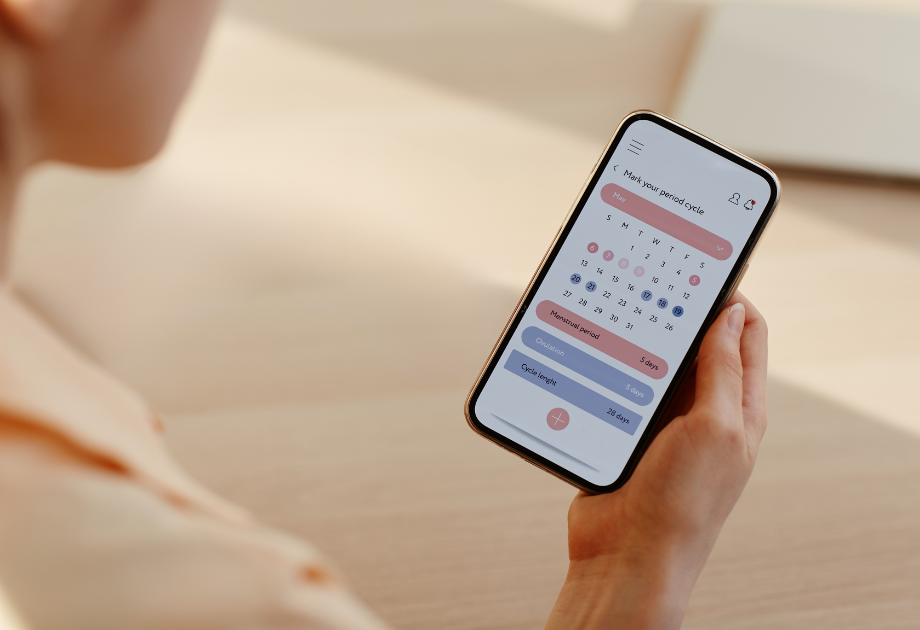
Bring your cycle counts. Write down the dates of your last several periods, plus your longest gap and your shortest. It's the most useful thing you can hand a doctor at a first appointment, since no test can reconstruct it.
If You're Trying to Conceive or Considering Fertility Preservation
If irregular cycles are getting in the way of getting pregnant, call a fertility clinic. Irregular cycles are reason to be seen rather than to keep trying and see what happens. So are cycles consistently shorter than 25 days, bleeding between periods, and periods that come rarely or stop altogether.
A fertility evaluation starts where a routine one does, with hormones and a look at your uterus. It goes on to establish whether you're ovulating and whether your tubes are open. A semen analysis comes in if you have a male partner.
If you're considering egg freezing, that's the same appointment. Cycle changes and ovarian reserve are connected, so the evaluation covers both.
Find Out What Your Cycles Are Actually Doing with The Fertility Wellness Institute of Ohio
A sudden cycle change is reason enough for an appointment if you're trying to conceive. You don't need a second symptom to justify the call, and you don't need to wait and see whether the next cycle settles.
Bring your cycle dates with you, however many you have. A single cycle length doesn't say much on its own, but set against the rest of your cycles it starts to. That's the part a clinic can't produce for you. And testing finds what's behind the pattern.
A first appointment is a conversation about what your cycles have been doing. Dr. Chin goes through the numbers with you and answers your questions along the way. If irregular cycles are getting in the way of conceiving, reach out today.