
What a Semen Analysis Actually Measures (and What the Numbers Mean)

The appointment takes about twenty minutes. What it measures took your body about ten weeks to make.
We're talking about semen analysis and the report you'll get after the appointment. You see, sperm aren't just stored up and waiting; your body is continuously building them. Each sperm spends roughly two months in "production" before it's finished. So, the sample you hand over at the appointment is really a report on your health from two months ago.
It's not really time travel, but you can call it that if it makes you feel cool. We're here to support you. But seriously, that production delay is why your results come back as a page of numbers. Nobody can hand you a yes or a no, because the page is describing a stretch of time rather than a moment.
This blog will tell you what the analysis measures, what the numbers on the report mean, and you can go about your day feeling like Marty McFly. Or Doc Brown, your choice.

What's on a Semen Analysis Report
So what's on the report you'll get? Seven measurements, printed in roughly this order, each with a baseline number beside it. The lab calls that a lower reference limit, and it marks the bottom of the range.
- Semen volume (1.4 mL). How much fluid you produced.
- Sperm concentration (16 million per mL). How many sperm per milliliter of it.
- Total sperm count (39 million per ejaculate). How many in the whole sample.
- Total motility (42%). The share that are moving.
- Progressive motility (30%). The share moving forward.
- Vitality (54%). The share that are alive. Labs check this when total motility comes back under 40%.
- Morphology (4% normal forms). The share that are the right shape.
Further down the report, you'll see pH, liquefaction time, viscosity, and white blood cells. Those four describe the fluid, not the sperm in it.
Now, two pairs on that list look like duplicates, but aren't.
Start with sperm concentration and total count. Both measure how many sperm you have. Concentration counts them per milliliter. Total count covers the whole sample. Volume is what separates the two, so a small sample can be crowded and still deliver a low total.
The other pair is motility. Total motility counts every sperm that's moving, including the ones going in circles. Progressive motility counts only the ones traveling forward.
So, if somebody tells you your count came back low, that's two possible results. Same with your motility. Worth asking which one they mean.
One more number comes up in the results conversation, and it might not be printed anywhere. Total motile sperm count comes from three of the measurements above. Multiply your volume by your concentration, then by the percentage that are moving. Some labs run that math and some leave it to your doctor. Either way, clinics weigh that one figure more heavily than any single measurement on its own.

How to Read Those Numbers
Take sperm concentration. Your report prints a baseline number of 16 million per milliliter next to your measurement. That's the bottom of the normal range, not a target.
There's no second number, because the range has a bottom and no top. Come back at 45 million and you're in range. Come back at 90 million and you're also in range, no better off. Every measurement on that page works the same way: you're in range, or you're below it.
But being below 16 million per milliliter isn't a "failing grade." Those baselines came from measuring men who had already fathered children. 5% of them landed below anyway. So, one result under a baseline isn't a diagnosis.
Those measurements aren't independent of each other, either. A low result in one can produce a low result in another. Total count is volume multiplied by concentration. So low volume pulls your count down even when your concentration is fine. Low vitality and low motility travel together for a different reason. Dead sperm don't swim.
So, read the page as a set, not a scoreboard. One measurement below its range tells you very little. Three of them below range starts to tell you something, and that's the version your doctor will walk you through.
Morphology is worth a second look, because the percentage looks smaller than the quantity it describes. When a technician evaluates the shape of the sperm, they'll check the head, the midpiece, and the tail against set dimensions. A cell that misses on any one of the dimensions counts as "abnormal." Critical morphology is the version we run in our clinic. The "critical" part means we grade shape against the strictest standards. That gives us a number we can trust when we talk through your options.
So, run the math on that 4% baseline. If you produced 50 million sperm per milliliter, 4% of that is 2 million perfectly formed sperm in every milliliter of your sample. Two million is plenty, because it only takes one to do the job.

What Results Point Toward
Your results, read next to your partner's, point toward one of four steps.
- Keep trying with timed intercourse. No lab and no procedure, just timing.
- Intrauterine insemination. The lab washes your sample first, which concentrates the moving sperm into a small volume, then places them directly in the uterus.
- Conventional IVF. A clinic retrieves your partner's eggs and combines them with your sperm, so fertilization happens outside the body.
- IVF with ICSI. An embryologist injects one sperm directly into an egg. Used for very low counts, and for low morphology when fertilization has failed before.
There's a fifth path, too. If your count comes back very low, or if no sperm turn up at all, you'll likely see a reproductive urologist. That's a different appointment with a different job, which is finding out why.
What Test Day Involves
Your prep for test day is one thing: no ejaculation for two to seven days before the appointment.
If you wait less than two days, there's less fluid to work with, so your volume and total count come in low. If you wait more than a week, you build up more sperm, but they sit around and lose motility.
The lab writes down how long you waited, because your result reads differently at two days than at seven.
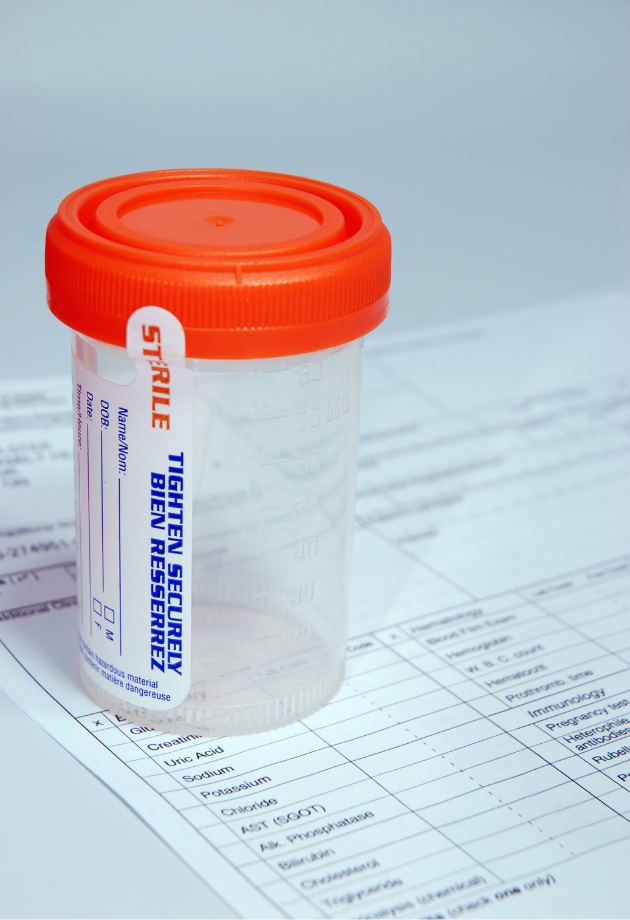
Most collection happens on-site, since the sample has to reach the lab within minutes. Some clinics allow you to collect at home if you can get it there in time, with strict rules about temperature along the way. Either way, the sterile container is the only thing that should touch the sample. Condoms, lubricants, and saliva all interfere with it.
Remember the ten weeks, too. A fever, a heat wave, a stretch of heavy drinking, or a medication you started and stopped all land inside the window your sample reports on. That's why guidelines call for a second analysis about a month after an abnormal first one.
One last thing about the collection itself. The first part of the ejaculate carries 60% to 75% of your sperm. If any of that misses the container, your count could come back as low when it isn't, so tell the lab before they run the sample.
Schedule a Semen Analysis with Critical Morphology at The Fertility Wellness Institute of Ohio
The report won't tell you what to do next. It covers your half of the picture. The decision takes your partner's results too, along with how long the two of you have been trying and what you've attempted already. So the appointment after the test is a conversation. Knowing what each number measures is what helps you take part in it.
The Fertility Wellness Institute of Ohio runs semen analysis with critical morphology in its own andrology lab. Dr. Chin will explain your results rather than summarize them, so you and your partner can choose your next step with confidence.
Reach out today to schedule yours, and bring your questions with you.