
Understanding Recurrent Pregnancy Loss and What Comes Next
After a first miscarriage, most people hear a version of the typical unhelpful platitudes. "This happens more often than you'd guess," "It was probably random," "Try again when you're ready." Sometimes, they're accurate, even if they are unhelpful. But after a second one, they become even less helpful. You want to know whether something is causing this, and whether anyone can find it.
There is a name for what you're experiencing. Recurrent pregnancy loss is the clinical term for two or more losses, and it's a condition with causes a doctor can look for. This requires a workup: a defined round of tests aimed at the causes that turn up most often. Two losses is enough to get one. You don't have to wait for a third.
This blog will tell you more about what you're facing, what a workup investigates, and what your plans afterward could include.
What Recurrent Pregnancy Loss Actually Means
ASRM defines recurrent pregnancy loss as two or more losses. Two is the point where a doctor starts testing for a cause instead of waiting to see what the next pregnancy does. The losses don't have to be back to back, either. A healthy pregnancy in between doesn't reset the count, so two miscarriages years apart still count as recurrent.
The threshold sits at two because two is uncommon. One miscarriage happens in 10 of 100 known pregnancies. Two miscarriages in a row happen to fewer than 5 in 100 women. Those odds explain why almost nobody around you has been through this. They also move your losses out of the category of separate events and into one condition, which a doctor can investigate.

Why Recurrent Pregnancy Loss Happens
The four causes of recurrent pregnancy loss are chromosomal, structural, hormonal, and clotting. Each one leaves evidence a test can find, which is what makes why you keep miscarrying an answerable question.
Chromosomes cause most single miscarriages. About half of first-trimester losses happen because the embryo formed with the wrong number of them. That accident belongs to one pregnancy and says little about the next. Inherited chromosome problems are rarer. One partner can carry a rearranged chromosome that causes them no trouble and passes on unevenly. A blood test from each of you checks for it.
The uterus accounts for a second share of repeated loss. Some differences are there from birth, like a septum that divides the cavity. Others build up over time, like scar tissue from an earlier procedure. ASRM finds congenital differences in 13.3 percent of patients with repeated loss, against 5.5 percent of everyone else. Every workup examines the cavity for that reason.
Thyroid disease is the hormonal cause worth checking first. ASRM cites miscarriage risk as high as 60 percent when hypothyroidism goes undertreated. Screening for it starts with a TSH blood test, which sits on the standard panel.
Clotting disorders make up the fourth group. The clearest one is antiphospholipid syndrome. The immune system produces antibodies that promote clots, and those clots can end a pregnancy. Diagnosis takes two positive blood tests, 12 weeks apart.
All four leave something a test can measure: a chromosome report, an image of the cavity, a number on a lab panel. Testing before the next attempt tells you which one you're dealing with.
What a Recurrent Pregnancy Loss Workup Looks For
A recurrent pregnancy loss workup asks a defined set of questions, then stops. Patients often expect an open-ended run through every test a lab sells. Choosing the tests in advance is what keeps it shorter and cheaper.
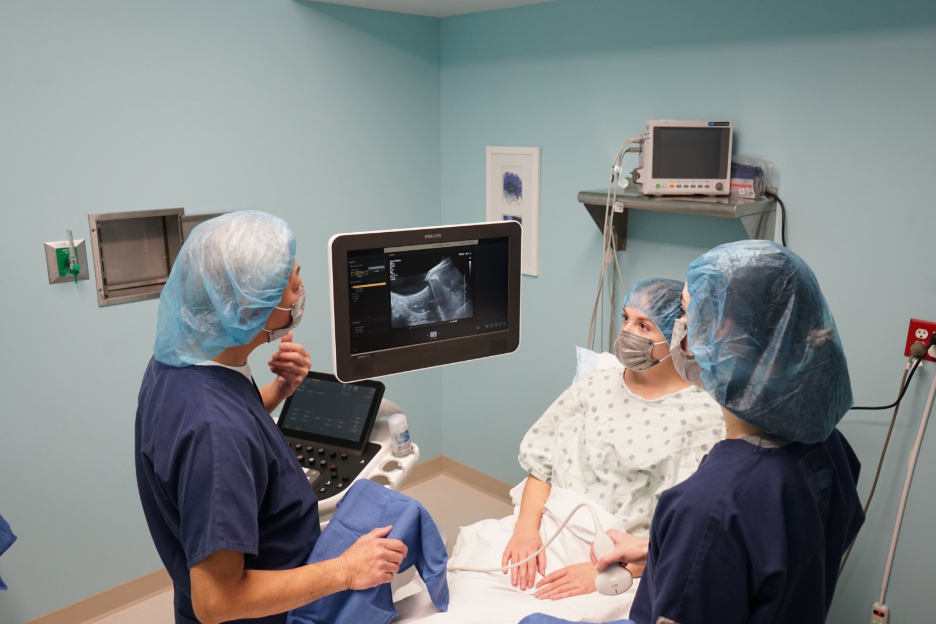
Testing after multiple miscarriages starts with a look inside the uterine cavity. Then comes bloodwork for the hormonal and clotting causes. Tissue from a miscarriage can also be tested for a chromosome problem, and a clear answer there shortens everything after it. Most patients never have that done, though, and the baseline workup runs without it.
Each test points at a cause from the section above. The uterine evaluation looks for the septum, the scar tissue, the polyp. The bloodwork looks at thyroid function and clotting antibodies. Guidelines leave out tests that wouldn't change the plan, so a short list means a careful workup rather than a cheap one.
At The Fertility Wellness Institute of Ohio, the workup opens with a review of your medical history. An evaluation of the reproductive organs follows. Your history decides which tests belong, so your panel won't match anyone else's. You end up with a finite process, aimed at causes that can be found.

What Happens When a Cause Is Found
Recurrent pregnancy loss treatment follows the finding. A diagnosis arrives with a specific thing to do about it, rather than a protocol everyone gets.
Treatment for repeated miscarriage looks different in each category. A septum comes out surgically before you try again. Thyroid disease is managed with medication, started before pregnancy and continued through it. A rearranged chromosome works differently. No surgery or medication can change it. Still, knowing it's there explains the pattern of your losses. It also opens the option of IVF with embryo testing, which screens embryos before a transfer. Antiphospholipid syndrome, the clotting condition, has the most specific treatment of the four. Once a blood test confirms it, the standard approach pairs low-dose aspirin with heparin, a blood thinner. But that pairing belongs with a confirmed diagnosis. Not every patient should be on it.
The clinic may add supportive medication during pregnancy as well. Options include progesterone, low-dose aspirin, heparin, and methylfolate. Few patients need all four.
Katie's story shows the sequence. Another clinic treated her for five years without finding a cause. Bloodwork here turned up a clotting disorder earlier testing had missed. Once treated, she carried the pregnancy she'd been waiting for. Finding the cause is what made preventing another pregnancy loss possible.
When No Cause Is Found
A workup that comes back clean can feel like the worst result. Nothing was found, so nothing can be treated. But the odds for those patients are good.
Most women who never get a diagnosis go on to carry a pregnancy. No cause is ever identified for more than half of women with repeated losses, according to ACOG. Of those with unexplained recurrent pregnancy loss, ACOG counts about 65 in 100 whose next pregnancy succeeds with no added treatment. ASRM reports a similar range for everyone with repeated loss, 50 to 80 percent. Those are your chances of pregnancy after recurrent miscarriage with no diagnosis to treat.
Cara's story sits at the far end of that range. She had eight losses with no cause ever named. Then a pregnancy held. An unexplained result tells you what nobody found. It isn't a prediction about your next pregnancy.
Take the Next Step With The Fertility Wellness Institute of Ohio
What separates a first loss from a second one is that the second gives a doctor something to look at. After one, there's no list to work through. After two, there is, and the workup exists to work through it.
There's one important thing we should stress to you. Repeated miscarriage is almost never caused by anything you did or didn't do. The people it happens to are the ones most likely to believe otherwise. If you've spent months going back through what you ate, lifted, or worried about, you can put that down.
When you're ready for answers, schedule a consultation for a recurrent pregnancy loss workup. The first visit reviews your history and lays out which tests fit your situation. You'll leave with a plan instead of another month of waiting.