
How Often Should You Have Sex to Get Pregnant? What Actually Works

It's 6 a.m. and one of you is squinting at a thermometer while the other checks an app that's been pinging about a fertile window since Tuesday. Last night it was a forum thread that swore by a certain position. The week before, it was your mother-in-law mentioning, again, that she got pregnant without "all the fuss." What started as wanting a baby has somehow turned into a scheduling project with a spreadsheet and a losing streak.
Here's the part nobody leads with: you're almost certainly overthinking it. Regular sex every day or every other day across your fertile window is the whole strategy, and most of the rules you've collected don't hold up. So let's clear out the noise and keep the few things that actually help, so this can go back to feeling like your life instead of a part-time job.
The Short Answer: How Often to Have Sex
Good news for anyone who's been treating this like a scheduling problem: you can stop. Couples who have sex every day and couples who have sex every other day get pregnant at nearly the same rate, so there's no perfect cadence to crack. The most-cited study on the question found the every-day group conceived in about 37% of cycles and the every-other-day group in about 33%. Other research lands in the same narrow range. A few percentage points are not worth rearranging your week over.
The reason that gap stays small is biology, not luck. Sperm can live in the reproductive tract for up to five days, but an egg only survives about 12 to 24 hours after it's released. So you're not trying to land a shot on a single moving target. You're trying to have sperm already waiting when the egg shows up, and a steady rhythm does that on its own. Keep sperm in the building, and you've covered the right day before you even know which day it is. That's why frequency beats precise timing.
When You're Actually Most Fertile
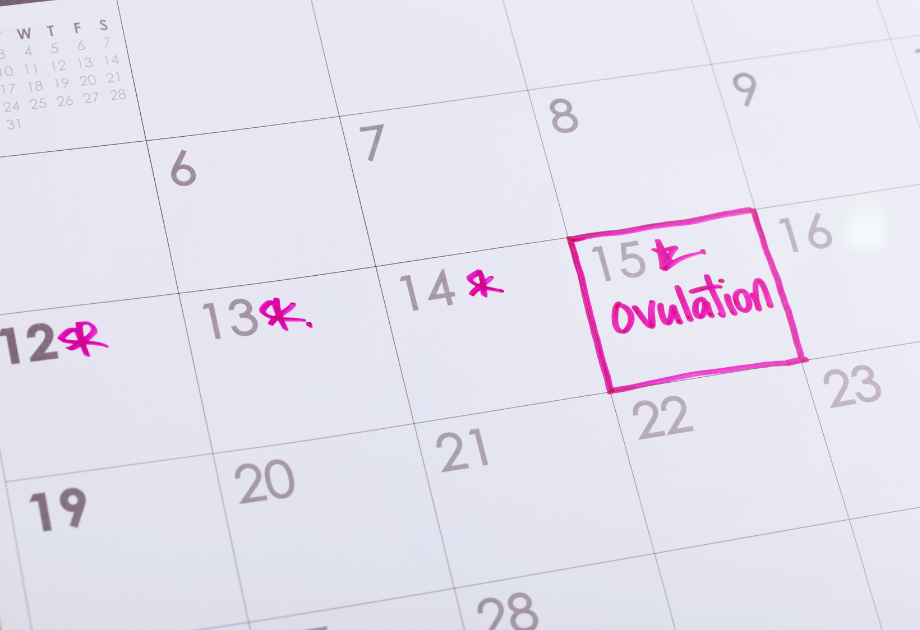
Your fertile window runs about six days: the five days before ovulation, plus ovulation day. So the "you have one shot" panic is misplaced. You have several.
Ovulation day itself isn't even your best shot. The two or three days before it are, by a wide margin. The British Fertility Society puts your odds around 26% from sex two days out, and down near 1% the day after ovulation. So aim for the run-up. If you spend the cycle waiting to pounce on one exact day, you're aiming at the wrong one.
This is also where the famous "day 14" advice falls apart for most people. Ovulation does tend to happen about 14 days before your next period. The trouble is counting 14 days forward from the day your current one starts, which only works if your cycle happens to run 28 days. Plenty of normal cycles run anywhere from 21 to 35, so your own ovulation might show up closer to day 7 or day 21. Day 14 is somebody else's cycle. Learning your own tells you a lot more.
One more that comes up a lot: yes, you can get pregnant from period sex. It's uncommon, but on a short cycle with early ovulation, sperm from a few days earlier can still be hanging around when the egg arrives.

Myths You Can Quit Worrying About Tonight
The internet has a lot to say about conception sex, and most of it falls apart the second you check it against evidence. Here are the four worth dropping first.
Do Sex Positions Matter?
No position improves your odds. Sperm reach the cervix within seconds of ejaculation, so gravity never gets a vote. The position you conceive in is just the one you like. Whatever elaborate setup you read about on a forum isn't doing anything your usual one wouldn't.
Should You Lie Still Afterward?
Lying still or propping your hips up afterward doesn't help either. Motile sperm move into the cervix almost immediately, so the work is done long before you've finished arranging the pillows. If you've been lying with your legs up the wall like you're recovering from a marathon, you can stop. Get up and get on with your evening.
Do You Have to "Save It Up"?
The thinking goes that a few days of abstinence stockpiles more sperm for the big moment. More sperm, better odds. But that's where it backfires. A long dry spell does raise the count, but those stored-up sperm move worse and carry more DNA damage. And it's the strong swimmers, not the sheer number, that reach the egg. When he isn't saving them up, his body keeps healthier sperm in rotation. So having sex regularly does more for you than spacing it out ever will.
Does the Lube Matter?
This one's worth a closer look. Plenty of standard drugstore lubricants slow sperm down in lab tests. Whether that actually lowers your odds of conceiving is less clear, since the studies on real couples are mixed. Switching is easy enough that it's worth doing anyway, so if you want lubrication while you're trying, reach for a "sperm-friendly" one. Look for a hydroxyethylcellulose base.

Why Trying Harder Can Backfire
For most couples, consistency does more than precision ever could. Sex two or three times a week covers your fertile window on its own. That rhythm overlaps the days that count, so nobody has to watch a calendar. You get the timing for free.
The harder problem is what tracking does to you. Sex turns into a scheduled obligation tied to a thermometer. It stops being something you want and becomes something you perform, and that can wear on a couple as much as the waiting does. So for a lot of people, the most useful move is to do less, not more.
Do You Need Ovulation Kits or Apps?
Ovulation predictor kits, the LH strips you pick up at the drugstore, genuinely help some people. So can tracking apps, cycle charting, and the newer fertility wearables. They earn their keep most when your cycles are irregular and the window's hard to predict. But they aren't required, because regular sex across the week already overlaps the fertile days without a device confirming it.
One word of caution about basal body temperature. It's a poor way to time sex, because the rise only shows up after ovulation has already happened. By the time the chart tells you to go, the window's closed. Treat all of these as optional aids, not a test you're failing by skipping.
When It's Worth a Conversation
There's a point where the right move is to stop trying on your own and get checked. If you're under 35 and you've had regular, well-timed sex for 12 months with no pregnancy, a fertility evaluation makes sense. If you're 35 or older, that drops to 6 months, because age affects the timeline and the case for checking sooner gets stronger.
An evaluation looks for the things timing physically can't fix. That means structural issues, ovulation problems, or a male-factor cause. Any one of those can hold up a pregnancy no matter how well you time things, and none of them respond to a better calendar. Finding out which one is in play is how you start solving it. At that stage, answers will get you further than patience will.
Take the Guesswork Out with The Fertility Wellness Institute of Ohio
If you've timed things well for a while and it still hasn't happened, timing probably isn't the thing standing in your way. An evaluation finds what is, and it trades another year of guessing for a clear look at what's going on.
That's where we come in. The Fertility Wellness Institute of Ohio gives you a clear answer and a concrete next step. Both come from your own results, not a chart you found online. Schedule a consultation, and let's sort it out together.