
Low Testosterone and Male Fertility: What the Symptoms Actually Look Like

There's a good amount of confusion around low testosterone. It's not always easy to find what counts as "low," what the symptoms are, or whether a "normal" lab result really tells you what you need to know. Low energy, a lower sex drive, and a shorter temper often get blamed on age or stress. In some cases, the cause is a drop in testosterone that can be measured and treated. This article clears up that confusion, and covers what low testosterone means for male fertility.
What Low Testosterone Actually Feels Like
Low testosterone, or hypogonadism, is rarely obvious. It usually comes on as a slow decline in things a man blames on everything else first. The most common low testosterone symptoms show up in daily life:
- Fatigue that sleep doesn't fully fix
- Lower sex drive and fewer morning erections
- Mood changes: more irritable, flatter, or low
- Loss of muscle and strength despite the same effort in the gym
- Trouble focusing and easier weight gain around the middle
Less common signs include hot flashes and breast tenderness. Yes, men get hot flashes too, and low T is one of the causes worth ruling out.
Every item on that list overlaps with stress, poor sleep, and a dozen other causes, which is why guessing rarely settles it. There's also a common assumption that low testosterone only affects older men. It affects younger men too. Testosterone declines by roughly one percent a year after 30, though the pace varies a lot between men. So a man in his 30s or 40s can be genuinely low while feeling nothing more specific than "just older."

How Testosterone and Sperm Production Are Connected
The hormone behind your energy and drive also runs the assembly line for sperm production. The system works as a loop. Your brain sends two hormones to your testes. LH tells them to make testosterone. FSH supports the cells that grow sperm. When the loop runs well, both jobs get done.
The two also track together. In men with mid-range sperm counts, more testosterone in the blood tends to mean more sperm. But a normal blood number doesn't guarantee healthy sperm. Sperm production depends on conditions inside the testes. The level circulating in your bloodstream is a separate thing.
The connection shows up where couples feel it most. One study looked at couples with unexplained difficulty conceiving. Male partners under 264 ng/dL had lower odds of a live birth, and lower odds of normal sperm shape. That's an association, not proof that one number causes the outcome. It's still a strong case for treating a man's hormones as part of the couple's fertility picture from the start
What Testosterone Therapy Does to Fertility
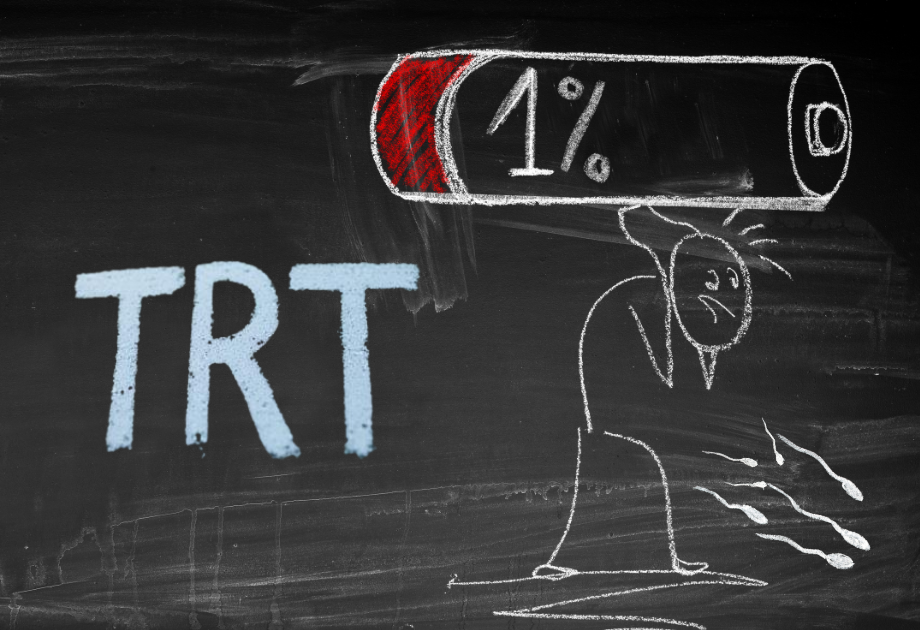
Testosterone therapy (TRT) is one of the first fixes a man who feels low is likely to hear about. It's what friends recommend and what clinics prescribe. And it works on one front: TRT raises the level of testosterone in his blood.
But here's what that leaves out. When testosterone comes from outside the body, the brain reads the high level and stops signaling the testes. Without that signal, testosterone inside the testes drops. That internal supply is what sperm production actually depends on. It normally runs far higher than anything that shows up in bloodwork. So, a man on TRT can carry strong lab numbers while his sperm production slows toward a stop.
The effect is common enough that researchers have studied it specifically. Testosterone has been tested as a form of male birth control, and it brought about two in three healthy men to zero sperm within roughly four months.
The suppression usually reverses. Sperm production comes back for the large majority of men after they stop. But recovery runs months, sometimes more than a year, and a smaller group never fully rebounds. None of this makes TRT the wrong choice for every man. It makes the order of operations worth knowing. A man who wants children benefits from understanding his levels, and his options, before choosing a treatment path. Some men in that position freeze sperm first. Others take a route that protects production from the start. hCG and clomiphene-based approaches raise testosterone without stopping the signal to the testes.
What the Right Bloodwork Reveals
Where your testosterone actually stands comes from a testosterone blood test. A single reading rarely tells the whole story. The result depends on what else gets measured, and on when the blood is drawn.
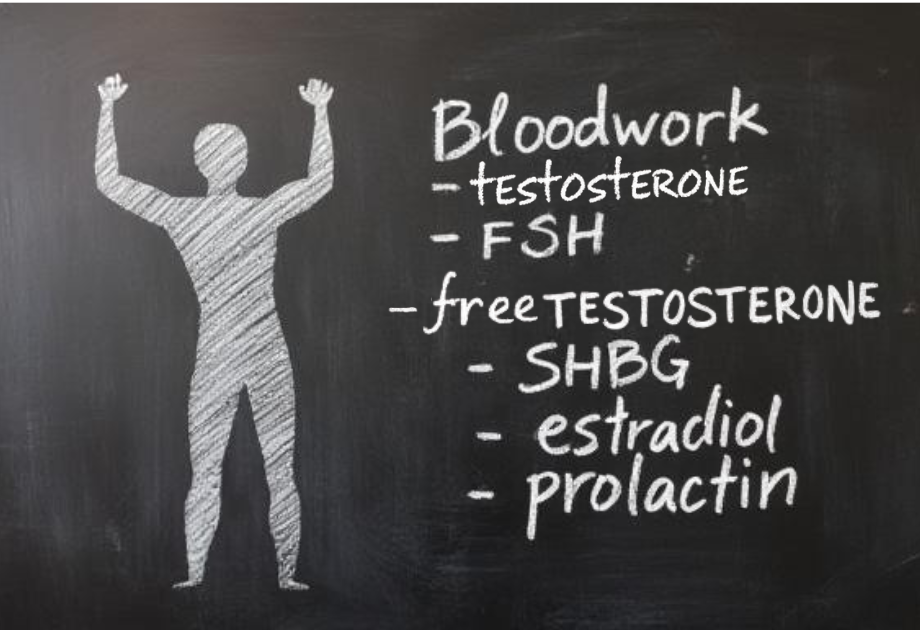
A full panel looks at more than one value:
- Total testosterone, the baseline number
- LH and FSH, which show where a signal problem sits: the brain or the testes
- Free testosterone, SHBG, estradiol, and prolactin, added when the picture needs them
Timing changes the result, too. The conditions of the draw are worth bringing up at the appointment:
- Early morning, when testosterone peaks
- Fasting, since food can push the number down
- Confirmed on a second morning, never diagnosed off one result
A result labeled "normal" can still be misleading. The common cutoff of 300 ng/dL comes from older, broad populations. But normal testosterone levels vary by age. The younger a man is, the higher his healthy range. For a man in his 30s or 40s, the low threshold sits closer to 350 or 360. So a result can clear the generic cutoff, get called "normal," and still be low for his age. The useful question is where a healthy man your age usually lands, and how far you sit from it.
Get Answers About Your Testosterone at The Fertility Wellness Institute of Ohio
If testing shows low testosterone and children are the goal, you have options.
A male hormone panel is a routine early part of a couple's workup. It often answers questions on his side of the picture that would otherwise stay open for months. We run the morning diagnostic bloodwork and confirm it on a second draw. Then we walk you through what each number means, for how you feel and for your plans.
Symptoms that look like age or stress can turn out to be something measurable and treatable. The answer starts with the bloodwork. Get yours measured.