
Hot Flashes at 35? What Early Perimenopause Symptoms Mean for Your Fertility
Hot Flashes at 35? What Early Perimenopause Symptoms Mean for Your Fertility
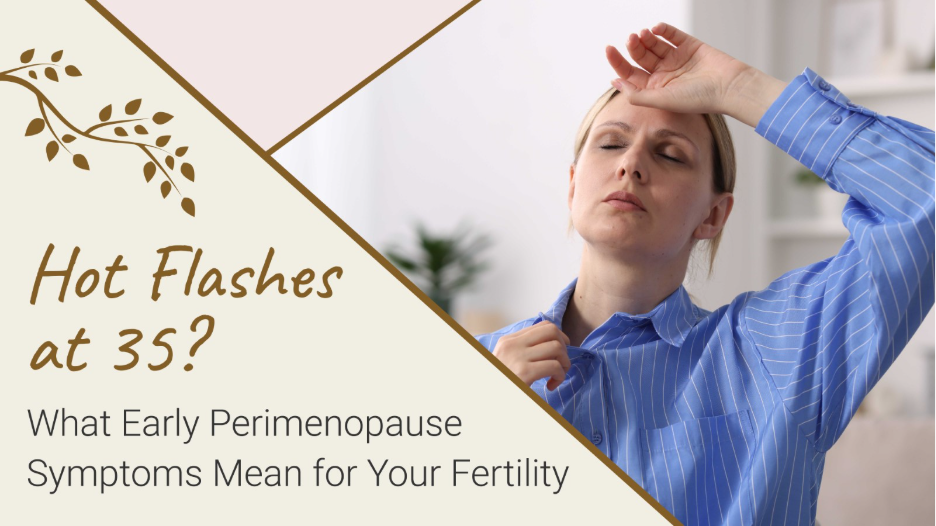
Most people think of hot flashes as a menopause symptom, maybe showing up somewhere in your fifties. But they can start well before then. Hot flashes, night sweats, and other menopause symptoms can show up as early as your mid-30s.
When these symptoms show up in your thirties, it's natural to start asking questions. Is it menopause? If these are the first signs of it, how long can you expect these symptoms to last? And if you're still planning your family, you might also ask how they affect your fertility.
This blog will tell you more about what early symptoms indicate (or don't), and help you know when to get tested.
Perimenopause Can Start Earlier and Last Longer Than You'd Expect
So is it menopause? Usually not, at least not yet. The likelier explanation is perimenopause, the transition leading up to menopause. In it, estrogen and progesterone rise and fall unevenly, which causes symptoms like hot flashes.
For most women, perimenopause starts at around age 47. Menopause follows, near age 51. (Those numbers are averages, not the earliest or latest anyone starts.) Starting in your mid-30s or early 40s is less common, though still well documented. True, a hot flash at 35 is early. But it's still within what doctors actually see and doesn't need to cause alarm.
How long does it last? The transition lasts about four years on average, although it varies widely. And it tends to last longer for women who start earlier. Hot flashes and night sweats can continue for years, though, sometimes even past your final period.

"You're Too Young for That" Isn't an Answer
Maybe a doctor told you you're too young for this. Or maybe your period still comes every month, right on schedule. Either way, your regular cycle can feel like proof that perimenopause isn't what's happening. And either way, “You’re too young,” just isn’t a good enough answer.
There are some doctors that will tell you 35 is too young, just on the basis that it’s less common. And a regular cycle isn't proof alone that you’re not perimenopausal. Early perimenopause often begins while your period still looks normal. And even then, hormones can fluctuate enough to cause symptoms months or years before your cycle visibly changes.
Hot flashes are just one item on a longer list of perimenopause symptoms:
- Sleep disruption: trouble falling asleep, or waking through the night
- Mood changes that resemble PMS, which about 4 in 10 women report
- Worsening premenstrual symptoms, including increased breast tenderness before a period
- Period changes: shorter or longer, lighter or heavier, or a skipped month
- Vaginal dryness and discomfort during sex, with lower desire (libido) for some women
- Fatigue, the result of broken sleep and fluctuating hormones
These symptoms have other causes, too. For example, Hashimoto's and other thyroid conditions can mimic perimenopause, causing almost all of the same symptoms. So that just goes to show that "You're too young" from a doctor really should be, "Let's run some tests."

What the Symptoms Do and Don't Mean for Getting Pregnant
A hot flash or a skipped period can feel like a sign that your fertile years are already over. But neither one is. The hot flash itself, that sudden wave of heat and sweating, comes from your nervous system reacting to a drop in estrogen, not from an empty ovary. Your estrogen is fluctuating, which is not the same as gone.
A skipped period means you didn't ovulate that month. But you keep ovulating, which is why pregnancy stays possible during perimenopause.
Even vaginal dryness is only a change in the tissue, not in your eggs or your uterus. None of these symptoms measures your fertility. What they can't tell you is how much time you have left. A blood test can.
What Bloodwork Actually Tells You
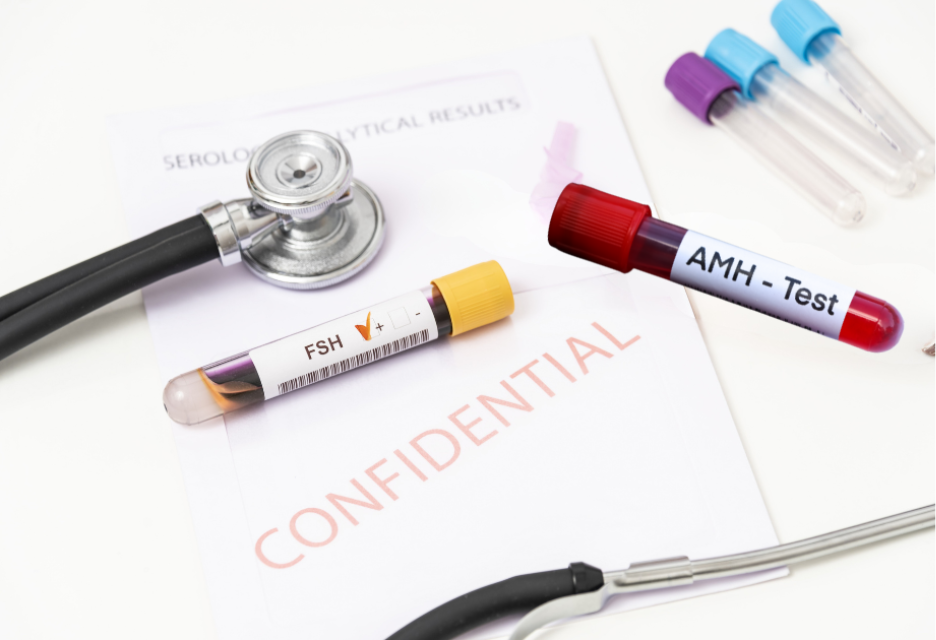
Bloodwork measures two hormones, AMH and FSH. Together, they estimate your ovarian reserve, the size of your remaining egg supply.
AMH, or anti-Müllerian hormone, comes from the small follicles that hold your eggs. The more of those follicles you have, the higher your AMH, which makes it a rough gauge of how many eggs remain. Because it starts dropping before other hormones do, it's usually the earliest sign that your reserve is declining.
FSH, or follicle-stimulating hormone, is the signal your brain sends each cycle to start growing an egg. As the egg supply drops, the brain has to raise FSH to get the same response. A high level, then, can point to a lower reserve. FSH swings from cycle to cycle, though, which is why one normal result doesn't settle anything on its own. Your clinician reads it alongside your age, your cycle history, and sometimes an ultrasound.
Together, these two markers point to your egg quantity and how you'd respond to fertility medication. They don't measure egg quality, which depends far more on your age. A low number means fewer eggs, not lower-quality ones. It can guide a treatment plan. But on its own, it won't tell you whether you'll conceive.
What Your Results Open Up
A number on its own doesn't hand you a plan. What it means depends on what you want. Someone preserving options for later reads the same result differently than someone trying to conceive now.
If children aren't in your plans yet, a low or borderline result is a reason to look at egg freezing. Freezing now stores eggs at their current age and quality. Outcomes are better the younger you freeze and the more eggs you store. Still, none of it guarantees a birth.
If you're trying to conceive now, standard guidance says when to get evaluated:
- Under 35: after 12 months of trying
- 35 or older: after 6 months
- Past 40, or with symptoms like these: right away
If you do need treatment, a few paths open up. For some women that means IUI, placing sperm in the uterus around ovulation. For others it means IVF, which fertilizes eggs in a lab before transferring an embryo. At 38 and older, evidence favors going straight to IVF over IUI first, since it tends to work faster. The right path depends on your results and your age, not on the symptom that first worried you.
Get a Clear Picture With The Fertility Wellness Institute of Ohio
A hot flash in your thirties is worth taking seriously. It's telling you your hormones are changing earlier than average. But where that leaves your fertility is a separate question. The answer comes from a test read against your age and history, not from the symptom itself.
The Fertility Wellness Institute of Ohio runs that testing and reads it in context, rather than sending you home with "you're too young to ask." If an early symptom has you wondering about your fertility, contact us. We can schedule diagnostic bloodwork and give you a clear picture of where you stand.